Thursday, December 6, 2012

http://myemail.constantcontact.com/Are-you-ready-to-get-DOWN-AND-DIRTY-.html?soid=1108232493224&aid=R72gr5FdT34

Are you ready to get Muddy for a great cause?


Run with team Adventure Boot Camp Bad Abs and 100% of the proceeds will go to help build the new Southwest Florida Childrens Hospital.

What: South Florida Mud Run
When: January 12th, 2013
Where: Redneck Yacht Club, Punta Gorda
Why: To help our children receive the best care they deserve,
          & to have  fun and get MUDDY!

click below to register or make a donation.
http://myemail.constantcontact.com/Are-you-ready-to-get-DOWN-AND-DIRTY-.html?soid=1108232493224&aid=R72gr5FdT34


Tuesday, October 23, 2012

IMMUNITY BOOSTING EXERCISES ARE NOTHING TO SNEEZE AT 


LOCAL BOOT CAMP OWNER SAYS IMMUNITY BOOSTING EXERCISES ARE NOTHING TO SNEEZE AT 


(Fort Myers, October 23, 2012) --With autumn officially here, we become more prone to colds, coughs, sneezes, sniffles, runny noses, and sore throats that will make us feel miserable through the next few months.  

 "As seasons and weather change, our immune system becomes more vulnerable and less resistant to various infections," says Sue Meredith, owner of Fort Myers/Cape Coral Adventure Boot Camp.
 

"The good news is that something as simple as regular exercise can keep all those pesky viruses, germs and bacteria at bay," Coach Sue says. "Among many other benefits of physical exercise, it is also a great boost to the immune system."  
 

In fact, research cited by the American College of Sports Medicine (ACSM), a leading organization in sports medicine and exercise science,shows that regular exercise can help boost the immune system by either stopping viruses in their tracks before they attack, or by reducing the duration of cold symptoms by half as compared to those who do not exercise.  
 

These findings are borne by various studies demonstrating that regular exercise produces Macrophages, the cells that defend the body against bacteria.  

"During a moderate workout, these cells circulate through the body, killing viruses and bacteria," Sue notes. "And although the immune system returns to its pre-exercise levels very quickly, each workout session appears to reduce the risk of infection over the long term."  
 

That may explain why - as studies indicate - people who work out regularly report fewer colds than non-exercisers. 
 

"Certainly, exercise is not a cure-all for whatever ails you, and even the most ardent fitness aficionados will get sick once in a while," Sue says. "However, there is all this compelling evidence suggesting that exercise may lower your risks of common infections." 
 

Now that you know just how beneficial regular workouts can be for your immune system, what kind of fitness regimen should you choose? "Luckily, exercises that are most effective in strengthening the immune system are also those that are great for your heart, weight control, and your health in general, so it's a 'win-win' situation," Coach Sue says. "Boot camps are really terrific because they focus on the entire body, as well as core and cardiovascular fitness, balance, strength and agility." 
 

And since boot camp is a fun outdoors workout, there is less risk of picking up germs and getting bored with a regimen that is either monotonous or inside a gym. 

 
"If boosting your immune system - and health in general - is your goal, then you certainly shouldn't choose a fitness routine that will get you into a rut and will make you want to give up," Sue advises. "The point is to make exercising so enjoyable that you will want to continue. And boot camps do just that."  

Thursday, October 18, 2012

Menopause Does Not Cause Weight Gain, but Increases Belly Fat, Major Review Finds


Menopause Does Not Cause Weight Gain, but Increases Belly Fat, Major Review Finds

ScienceDaily (Oct. 16, 2012) — A comprehensive review by the International Menopause Society has found that going through the menopause does not cause a woman to gain weight. However, the hormonal changes at the menopause are associated with a change in the the way that fat is distributed, leading to more belly (abdominal) fat.
To mark World Menopause Day (Oct. 18), the International Menopause Society has developed a state-of-the-science review on weight gain at the menopause. This report is published in the peer-reviewed journal, Climacteric.
Being overweight or obese is a major worry for many women, and through midlife, women tend to gain on average around 0.5 kg per year (around 1lb per year). This can have significant consequences, as being overweight or obese is associated with a range of conditions including depression, hypertension, cardiovascular disease and diabetes. Globally, around 1.5 billion adults are overweight, and of these around 300 million women are obese. Obesity rates have doubled since 1980, especially in Western countries. There are a variety of reasons for the increase, not only lifestyle reasons. In general, more women than men are obese, and fluctuations in sex hormones have been proposed as being implicated in the weight gain.
The review group considered the evidence on why women gain weight around the menopause. They found that absolute weight gain is determined by non hormonal factors, rather than the menopause itself.
The key finding was that the way fat is deposited changes at the menopause; studies indicate that this is due to the drop in estrogen levels at menopause. Irrespective as to whether women do or do not gain weight at midlife, after the menopause, women experience a shift in their fat stores to their abdomen .
According to review leader, Professor Susan Davis (Monash University, Melbourne, Australia): "It is a myth that the menopause causes a woman to gain weight. It's really just a consequence of environmental factors and aging which cause that. But there is no doubt that the new spare tyre many women complain of after menopause is real, and not a consequence of any changes they have made. Rather this is the body's response to the fall in estrogen at menopause: a shift of fat storage from the hips to the waist."
The review notes that increased abdominal fat increases the risk of future metabolic disease, such as diabetes and heart disease, in postmenopausal women. It also noted that, contrary to popular opinion, estrogen therapy (HRT) does not cause women to put on weight. There is good evidence that HRT can prevent abdominal fat increasing after menopause.
The IMS is calling for women to be more aware of the problems associated with excess weight, and to take early steps to ensure that they don't gain excess weight after the menopause.
Professor Davis continued: "What this translates to in real terms is that women going through the menopause should begin to try to control their weight before it becomes a problem, so if you have not been looking after yourself before the menopause, you should certainly start to do so when it arrives. This means for all women being thoughtful about what you eat and for many, being more active every day. Estrogen therapy (HRT) can also help. But each woman is different, so at the menopause, it is important to discuss your health with your doctor."
IMS President, Tobie de Villiers (Cape Town, South Africa), said: "Weight gain is a major risk factor for a variety of diseases, including diabetes and cardiovascular disease. Heart disease is by far the number one killer of postmenopausal women, and this risk is increased by excess weight. Women need to be aware of this, especially at the menopause when estrogen levels drop. A woman may need to adjust her lifestyle to ensure a healthier life after the menopause. In fact, I would say that a woman should consider using the menopause as a marker, a reason to review her overall health, with her doctor, so that she can take her own decisions on how her life moves forward."
 

Story Source:
The above story is reprinted from materials provided by International Menopause Society, via AlphaGalileo.
 

Journal Reference:
  1. S. R. Davis, C. Castelo-Branco, P. Chedraui, M. A. Lumsden, R. E. Nappi, D. Shah, P. Villaseca. Understanding weight gain at menopause. Climacteric, 2012; 15 (5): 419 DOI: 10.3109/13697137.2012.707385


Tuesday, September 25, 2012

WOMENS DAY STRESSES HEALTHY LIVING AND EXERCISE

National Womens Health and Fitness Day
September 26, 2012


SUE MEREDITH, BOOT CAMP OWNER:
WOMENS DAY STRESSES HEALTHY LIVING, EXERCISE
 
 
(Fort Myers, September 20,2012) - If women are from Venus and men are from Mars, it follows that ladies need a slightly different workout routine than their male counterparts.
 
This message is all the more relevant today because the last Wednesday of September marks Women's Health & Fitness Day, an annual event that focuses attention on the importance of regular physical activity and health awareness for women of all ages.
 
"Women have a different musculoskeletal structure, with more body fat and less muscle mass than men, " says Sue Meredith, owner of Fort Myers/Cape Coral Adventure Boot Camp. "And because of these anatomical differences, some of their health challenges are gender-specific."
 
Meredith says that in order to maximize their health and keep serious diseases at bay, women should follow these three lifestyle habits:
 
Quit smoking: Researchers found that women who smoke have a 25 percent higher risk of developing heart disease than men. "Cigarettes are not good for anyone - so kick the habit," Meredith urges.
 
Eat well: Women need fewer calories than men, but they need more iron and calcium. "Find out which foods are rich in these substances and make them part of your healthy low-calorie and low fat diet," Meredith suggests.
 
Exercise regularly: "There is enough evidence showing that physical activity helps prevent three leading causes of death in women: heart disease, breast cancer, and stroke," Meredith says. "And, it also protects against osteoporosis, which is predominantly a woman's condition because women have lower bone density than men and they lose bone mass quicker as they age."
 
How does exercise help prevent these conditions? "It helps you lose extra pounds and maintain healthy weight. Being overweight or obese increases the risk of heart disease, breast cancer, and stroke," Meredith points out.
 
For an effective, women-friendly workout, she recommends two types of exercises.
 
"The best fitness program for women should include interval training, because it really pumps up the metabolism throughout the day and is a great cardio workout as well," she says. "And strength training is the most effective way to fight osteoporosis because it improves bone density, as well as muscle strength."
 
Do you want to further increase your chances of getting fit? Join a boot camp! A British study released last year found that women who work out with others will lose an average of 10 pounds more than those who go it alone.
 
"Women are more likely than men to participate in group programs because they like social aspects of working out," Meredith notes. "Plus, exercising with others who share the same fitness goals motivates them to keep going."
Ladies, I ask you to make Wednesday September 26th, 2012 the day you start a new Healthy Lifestyle by doing your own P.H.F.C. (Personal Home Fitness Challenge) go outside and walk for 30 minutes, play with the family dog, or take your kids to the park. Our children need to get more fresh air and exercise today too! Some other suggestions: How many Pushups and Jumping Jacks can you do?  Get a jump rope and count how many rotations you can do without stopping or step up and down on a small step for 1 - 3 minutes. I would love to hear about your results so be sure to email them to me when you have completed your challenge and tell me how you plan to stay on track with your new Lifestyle. I'd be happy to help you start or sustain a Healthy Lifestyle.   
*BE SURE TO CHECK WITH YOUR DOCTOR BEFORE STARTING ANY EXERCISE PROGRAM.


About Sue Meredith, Fitness Expert:
Sue Meredith, an avid fitness enthusiast for 13 years, is a NESTA Certified Adventure Boot Camp Instructor and Certified Personal Fitness Trainer through World Instructor Training Schools. She also holds Certificates in Nutritional Concepts and Nutritional Strategies for Performance. She can be contacted at getfit@fortmyersadventurebootcamp.com or 239-220-2269 and is available for media interviews on a wide range of topics related to health, wellness and fitness.

Saturday, August 11, 2012

Why can't I lose weight?

Why Can’t I Lose Weight?

Losing weight and burning fat DOES NOT have to be a losing battle!  You have more control over it than you think.
Small tweaks can make a BIG difference.

Here are a few reasons why you’re not seeing the results you’d like:

You’re not strength training. Often, people who are not losing weight don’t do strength training. The more lean, sleek muscle you have, the faster your resting metabolism is because muscle is the body’s most metabolically active tissue.

You’re not exercising in a way that forces your body to adapt. The adaptive response requires energy; it raises your body’s energy needs. The body will then dig into stored fat for this energy.
If you’ve been strength training and the weight hasn’t been coming off, it may be because you’re not doing much more than merely going through the motions.
There’s the story of a heavy-set woman who was doing body weight squats.  A trainer waltzed over, knelt beside her, said “Hi” with a smile, then handed her two 10 pound dumbells (one for each hand).
The woman’s mouth fell open, but the trainer said, “You’re going to do eight reps of your squats but this time you’re going to hold a 10 lb dumbbell on each side.”
“I can’t do it with that weight!”
“Oh yes you can. Trust me. You’re going to complete all eight reps.”
The woman said her goal was to lose weight, but nothing was happening despite regular workouts. She began her squats, and it wasn’t easy. She had to fight her way to the eighth rep, but she completed eight full repetitions.
The trainer said, “Now that’s the way every set should feel. Apply this effort level to all of your sets for every exercise. You won’t lose weight if you keep doing something your body is efficient at. You must do something that forces you to struggle. Struggling begets weight loss.”
A month later the woman reported having dropped an entire dress size.
Moral of this true story: Exercises that require you to push harder will burn fat and spark weight loss, especially when paired with sensible eating.

You eat mindlessly. Every little sample and nugget counts. One tablespoon of gravy is 100 calories. A “little bit here and there” adds up.  Avoid eating when you’re focused on other things, such as watching TV or you’re on the computer.

You drink diet sodas. Artificial sweeteners often trigger hunger.

Too many processed foods. These trigger hunger, and too much white sugar and high fructose corn syrup will get stored as fat.

You skip breakfast. Breakfast, even if it’s only a cup of yogurt, tends to tame later-day appetite. Skipping it can make you feel entitled to overeat later on.

You hold onto the treadmill. This has got to be one of the most weight-loss-sabotaging habits out there. The body has absolutely no reason to burn more fat in response to make-believe walking.
Instead, pump the arms and get winded to force your body to adapt. Remember, the body won’t adapt to something that it’s very efficient at doing (e.g., walking while holding onto something for support).

You don’t do HIIT: high intensity interval training. This form of cardio blasts fat.

Inconsistent exercise habits. Regular exercise means the difference between success and failure.  Even if you’re doing everything right in the gym, consistency is the MOST important thing.

Poor sleeping habits. Research shows that under six hours of sleep and over nine are strongly linked to excess body fat.

Too much daytime napping. Excessive inertia means a slowed metabolism to accommodate it.
Before you blame your parents and grandparents for having “the wrong genes,” review your lifestyle habits to find out what can be modified to promote fat loss.

Saturday, July 21, 2012

GIVE TONING SNEAKERS A BOOT


 Loading
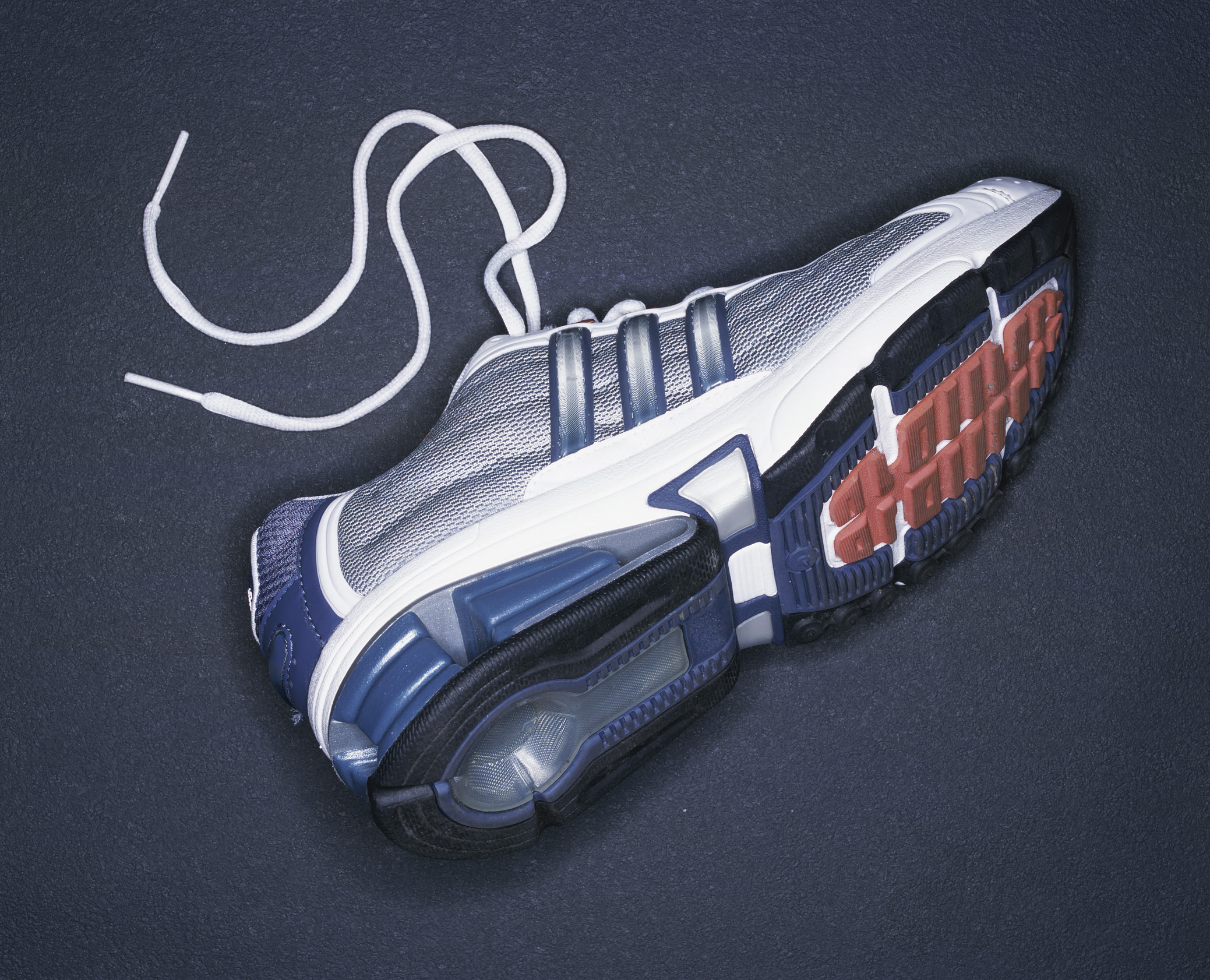
(Ft. Myers, July 23) – When it comes to exercise, it is important for consumers to be aware of fake product claims. Take “toning” sneakers, the ones that allegedly burn more calories than “regular” athletic footwear, while firming up butts, legs and calves.
“These sneakers can cost as much as $250, but there is no credible proof that they provide a better workout than cheaper models,” says Sue Meredith, a personal trainer at Fort Myers/Cape Coral Adventure Boot Camp. “Unfortunately, the advertisement misleads many people into believing that by merely walking or running in these shoes, they will get in shape. But that’s certainly not the case.”
Sports and fitness experts are debunking manufacturers’ promises that these shoes will deliver better results than ordinary workout sneakers. For example, the American Council on Exercise (ACE), a non-profit organization promoting safe and effective physical activity, concluded its recent study into this special footwear by saying that “there is simply no evidence to support the claims that these shoes will help wearers exercise more intensely, burn more calories or improve muscle strength and tone."
Sports experts at John Hopkins University School of Medicine and the American Academy of Podiatric Sports Medicine also say toning shoes offer no benefits.
“Unfortunately, many consumers continue to be duped into spending quite a bit of money on this product which doesn’t live up to its hype,” Meredith notes. “People should keep in mind that when it comes to effective exercise, there are no shortcuts, gimmicks or Magic Pills.”
Meredith also points out that, due to its special design features such as rounded soles, people with balance problems can be at risk of falling down while walking or running in these shoes.
“Any piece of athletic equipment that can make you prone to injuries should be avoided,” she says. “Exercise should be not only effective but also safe. Remember: physical fitness must be good for you, rather than harmful.”
And while it is true that people should wear comfortable and well-fitting shoes while working out, “there is no need to buy expensive “Magic” footwear or believe that a pair of shoes will help them tone and firm up any part of their body. That just doesn’t make sense,” Meredith says. You should however, be sure to be fitted with the correct shoes for your foot type. Your local athletic shoe store, like The Run Shoppe in Cape Coral on Del Prado can help you pick the right shoe for the right job. You need to have your feet checked for things like high or low arches, do you stand on the inside or outside of your feet. The correct shoe support for your feet will make all the difference in the world. Incorrect shoes can cause foot pain, knee pain or back pain. So don’t go for just any athletic shoe, get the correct fitting, safe shoe.
The only way to fully benefit from exercise is to have either a regular total body workout or – depending on individual needs - a routine that focuses on specific fitness goals, such as increased endurance, weight loss or increase muscles.
“Instead of shelling out hundreds of dollars for useless and potentially dangerous shoes, people would get much better value and results by using that money to hire a personal fitness instructor,” Meredith suggests. “This way, they will not only receive top-notch physical training tailored to their specific needs and goals, but also make sure they exercise safely and healthily.”


Give Toning Sneakers a Boot